Automation Direct Explained: Affordable Industrial Automation for Smarter Manufacturing
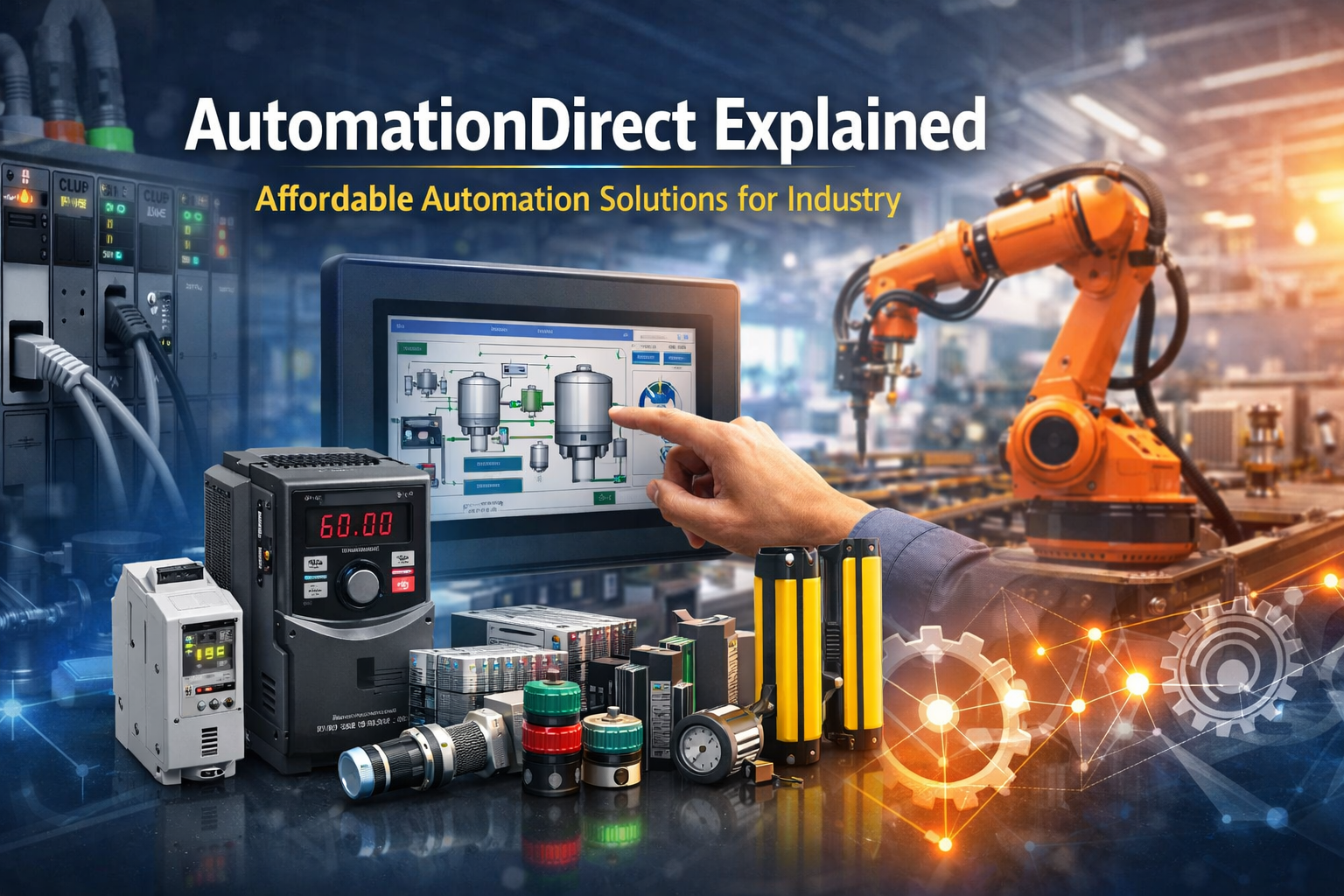
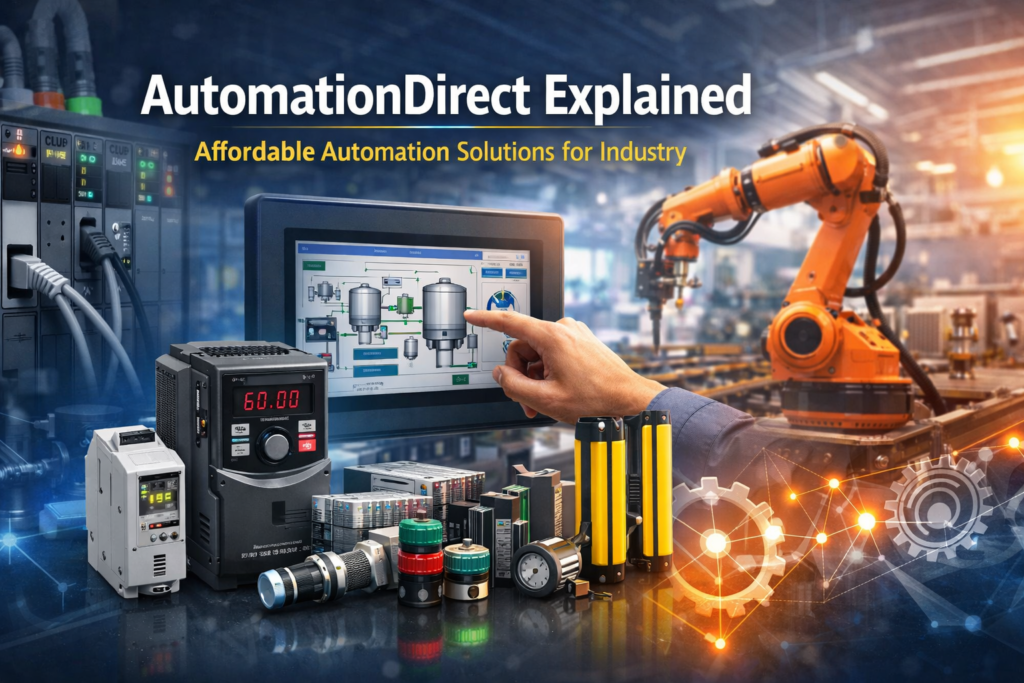
Industrial automation no longer belongs only to large factories with massive budgets. Today, small and mid-sized manufacturers also rely on programmable controllers, sensors, and drives to stay competitive. One name that often appears in this space is Automation Direct—a supplier known for cost-effective automation products and fast delivery.
But what exactly is Automation Direct, and why do so many engineers and plant managers use it? This guide explores the company, its product ecosystem, and how real facilities apply its solutions to boost productivity, safety, and uptime.
What Is Automation Direct?
Automation Direct is a U.S.-based industrial automation supplier that sells directly to customers instead of through distributors. This business model helps keep prices low while offering technical support, documentation, and training resources.
The company focuses on:
- PLC systems and controllers
- Human-machine interfaces
- Variable frequency drives
- Motion control equipment
- Industrial sensors and safety devices
- Power supplies, relays, and enclosures
By targeting practical automation needs instead of ultra-premium niches, Automation Direct appeals to OEMs, system integrators, maintenance teams, and startups building new machines.
Why Automation Matters in Modern Manufacturing
Automation continues to expand across industries such as food processing, packaging, water treatment, logistics, and renewable energy. According to industry reports, automated systems can improve production efficiency by 20–30% while reducing unplanned downtime and labor costs.
Manufacturers adopt automation to:
- Increase output consistency
- Reduce scrap and rework
- Improve worker safety
- Collect production data
- Scale operations faster
Automation Direct fits into this trend by lowering the barrier to entry. Plants that once delayed upgrades due to cost can now modernize incrementally.
Core Product Categories from Automation Direct
PLCs and Control Systems
Programmable logic controllers form the backbone of most industrial automation projects. Automation Direct offers several PLC families designed for different scales, from compact machines to complex production lines.
Engineers often choose these systems for:
- Straightforward programming software
- Ethernet connectivity
- Modular I/O expansion
- Competitive pricing
A packaging line, for example, might use a mid-range PLC to synchronize conveyors, sealers, and labelers while collecting performance metrics.
HMIs and Operator Panels
Human-machine interfaces allow operators to interact with equipment, view alarms, and adjust settings. Automation Direct HMIs range from small touch panels for single machines to larger displays for control rooms.
Common uses include:
- Monitoring tank levels in water plants
- Displaying production counts
- Adjusting speed setpoints
- Acknowledging safety alerts
Clear visualization reduces operator errors and shortens troubleshooting time.
Drives and Motion Control
Variable frequency drives regulate motor speed and torque, which saves energy and extends equipment life. Motion controllers and servo systems handle precise positioning tasks in robotics, pick-and-place units, and CNC machines.
A real-world example involves a conveyor system in a distribution center. By installing drives that ramp motors smoothly instead of starting them abruptly, the facility reduced mechanical wear and cut energy usage during low-demand shifts.
Sensors and Safety Devices
Automation only works when systems receive accurate field data. Automation Direct supplies photoelectric sensors, proximity switches, pressure transmitters, and temperature probes for monitoring conditions across a plant.
Safety components include light curtains, emergency stop relays, and safety PLC modules. These help facilities comply with OSHA requirements and international machine safety standards while protecting workers from hazards.
Electrical Components and Enclosures
Beyond controllers and sensors, the company also offers control panels, DIN-rail hardware, circuit breakers, and power supplies. This lets engineers source most project components from a single vendor, reducing procurement complexity.
What Makes Automation Direct Different?
Several factors explain why Automation Direct continues to grow in popularity.
Direct-to-Customer Pricing
By selling online and through catalogs instead of multi-layer distribution networks, Automation Direct keeps margins lower. For cost-sensitive projects, this can free budget for better sensors, redundancy, or future expansion.
Technical Support and Documentation
The company provides phone support, wiring diagrams, manuals, and training videos. For maintenance teams without in-house automation experts, this guidance speeds up installation and troubleshooting.
Fast Shipping and Stock Availability
Downtime is expensive. Automation Direct stocks many products in U.S. warehouses, allowing same-day shipping on common items. When a PLC fails or a drive needs replacement, quick delivery can save thousands of dollars in lost production.
Real-Life Applications Across Industries
Food and Beverage Processing
Hygiene standards and traceability matter in food plants. Automation Direct controllers and HMIs often manage:
- Batch mixing
- Temperature control in ovens
- Packaging lines
- Washdown conveyor systems
One regional bakery automated its proofing ovens and conveyors using PLCs and drives, increasing throughput by 18% while keeping temperature variance within tight limits.
Water and Wastewater Treatment
Municipal systems rely on pumps, valves, and sensors to maintain safe water quality. Automation Direct equipment commonly appears in:
- Pump station control panels
- Chemical dosing systems
- Tank level monitoring
- Remote telemetry units
By adding HMIs and data logging, operators can track flow rates and detect leaks earlier.
OEM Machine Builders
Original equipment manufacturers value predictable pricing and easy integration. Many build packaging machines, presses, or material handling systems around Automation Direct PLC platforms to keep final machine costs competitive for customers.
Automation Direct and the Rise of Smart Factories
Smart manufacturing depends on connectivity, data analytics, and remote monitoring. Many Automation Direct controllers include Ethernet ports and industrial communication protocols, allowing plants to:
- Send production data to SCADA systems
- Monitor equipment health remotely
- Integrate with MES software
- Support predictive maintenance
As Industry 4.0 adoption grows, affordable connected devices make digital transformation achievable even for smaller operations.
Key Benefits for Plant Managers and Engineers
Automation Direct appeals to both technical and business stakeholders because it combines performance with value.
Major advantages include:
- Lower upfront capital costs
- Broad product selection
- U.S.-based support teams
- Short lead times
- Simple software tools
These factors reduce project risk and help justify automation investments to leadership.
How to Decide if Automation Direct Fits Your Project
Not every automation project has the same requirements. Highly regulated pharmaceutical lines or extreme-environment oil rigs may need specialized hardware. For most general manufacturing and utility applications, AD works well when:
- Budgets are limited
- Systems need fast deployment
- Spare parts must be easy to source
- Staff want accessible documentation
Evaluating I/O counts, network needs, safety levels, and environmental ratings ensures the chosen equipment aligns with long-term goals.
Conclusion: Is Automation Direct Worth Considering?
Automation Direct has carved out a strong position in industrial automation by making reliable controls affordable and accessible. From PLCs and HMIs to drives and sensors, its catalog supports everything from small machines to full production lines.
If you are planning a system upgrade, designing new equipment, or trying to cut downtime without overspending, AD deserves a close look.
Take the next step: assess your current processes, identify automation gaps, and explore how cost-effective controls could improve efficiency, safety, and scalability in your operation.
Frequently Asked Questions
What does Automation Direct specialize in?
Automation Direct focuses on industrial automation products such as PLCs, HMIs, variable frequency drives, sensors, safety components, and electrical hardware for manufacturing and utilities.
Is Automation Direct suitable for small businesses?
Yes. Its pricing model and wide product range make it popular with small manufacturers, OEM startups, and maintenance teams looking to automate without major capital investment.
Are Automation Direct PLCs reliable?
Many facilities use them in continuous production environments. Proper installation, environmental protection, and maintenance are key to long service life, just like with any industrial controller.
Does Automation Direct provide technical support?
The company offers phone support, manuals, wiring diagrams, training videos, and software downloads to help engineers design and maintain systems.
Can Automation Direct equipment support Industry 4.0 initiatives?
Many controllers and drives include Ethernet networking and data connectivity, enabling integration with SCADA, MES, and remote monitoring platforms.
How fast is Automation Direct shipping?
Automation Direct stocks many products in U.S. warehouses, and commonly ships in-stock items the same day, which helps reduce downtime during repairs or upgrades.