Samsung Phone vs iPhone: Which Smartphone Reigns Supreme in 2026?
Introduction
Choosing a new smartphone can feel like navigating a tech jungle. Two brands dominate the conversation: Samsung and Apple. Both offer cutting-edge technology, sleek designs, and loyal fan bases, but which one truly fits your lifestyle? In this detailed comparison, we break down features, performance, design, and value to help you make an informed decision (Samsung Phone vs iPhone).
Design and Build Quality
Samsung Phones
Samsung has long been celebrated for its innovative designs. The Galaxy S and Galaxy Z series, for example, showcase curved displays, ultra-thin bodies, and foldable options that push the boundaries of smartphone design. Recent models also feature durable glass and aluminum frames, ensuring premium build quality.
- Pros: Sleek designs, innovative folding screens, higher screen-to-body ratio
- Cons: Some models feel large for small hands
iPhone
Apple maintains its iconic design philosophy: minimalistic, polished, and instantly recognizable. iPhones are known for their sturdy construction, ceramic shield front covers, and precise machining. While the design changes are often subtle year to year, Apple focuses on refinement rather than radical redesigns.
- Pros: Durable build, consistent design, premium feel
- Cons: Fewer customization options, less experimental
Verdict: Samsung leads in experimental designs and screen innovation, while Apple excels in timeless aesthetics and durability.
Display Technology
Samsung has consistently led the way in display technology. Their AMOLED and Dynamic AMOLED screens deliver vivid colors, deep blacks, and smooth refresh rates up to 120Hz. Foldable models also provide tablet-like experiences without compromising portability.
iPhones use Super Retina XDR displays with OLED technology, offering sharp, true-to-life colors. Apple prioritizes color accuracy, brightness, and True Tone features for a consistent viewing experience.
Key Takeaway: Samsung excels in high-refresh-rate and immersive displays, while iPhone ensures color accuracy and consistent brightness (Samsung Phone vs iPhone).
Performance and Software
Samsung Performance
Samsung devices run on the latest Snapdragon or Exynos processors, depending on the region, coupled with ample RAM. This ensures smooth multitasking, gaming, and app performance. Samsung’s One UI interface adds customization options and advanced multitasking features.
iPhone Performance
iPhones are powered by Apple’s proprietary chips like the A17 Bionic, known for industry-leading speed and efficiency. iOS is optimized to work seamlessly with Apple hardware, delivering unmatched stability and longevity.
- Speed: iPhones often outperform Samsung in raw processing power.
- Software Updates: iPhones receive longer software support—up to seven years, while Samsung generally supports four to five years.
Verdict: For power users, iPhones offer unmatched efficiency and longevity. Samsung provides flexibility, multitasking capabilities, and more hardware options.
Camera Comparison
Photography is often a deciding factor for smartphone buyers.
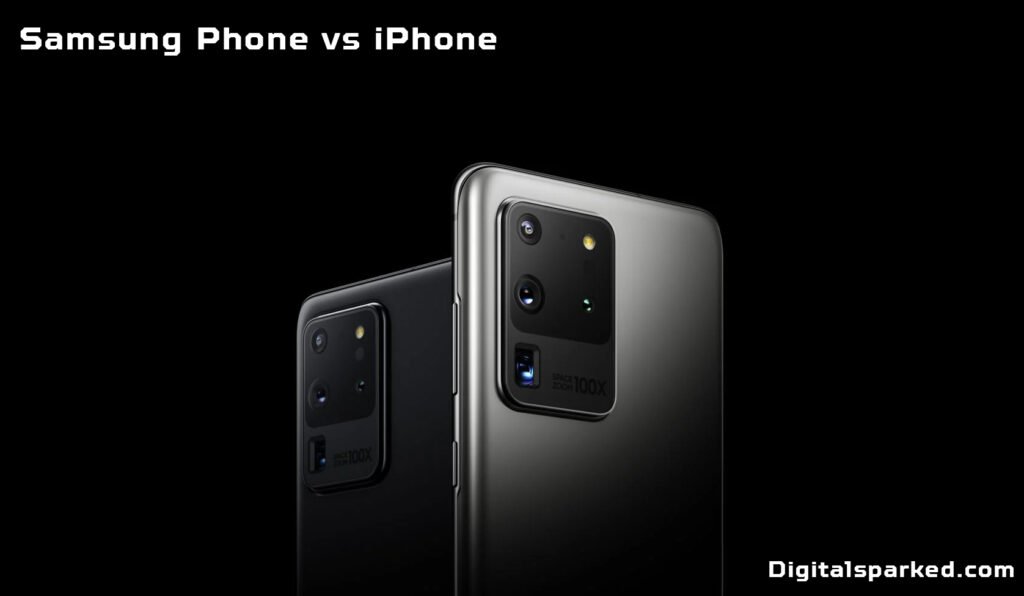
- Samsung: Galaxy phones feature high-resolution sensors, advanced night modes, and zoom capabilities up to 100x in some models. Pro-grade camera modes allow enthusiasts to manually adjust settings.
- iPhone: Apple focuses on realistic image processing, color balance, and cinematic video features. iPhones excel in video recording and consistency across all lighting conditions.
Practical Insight: Samsung offers versatility and zoom advantages, while iPhone delivers reliability and video excellence.
Battery Life and Charging
Samsung phones generally offer larger batteries, fast charging, and wireless charging. Foldable models, however, may have slightly smaller battery capacities due to design constraints.
iPhones often have smaller batteries but optimize energy usage through tight hardware-software integration. MagSafe accessories and fast charging keep iPhones competitive.
Tip: If all-day battery life is your priority, Samsung devices may be slightly ahead. iPhones offer efficiency over raw capacity.
Ecosystem and Connectivity
Apple’s ecosystem is one of its strongest advantages. iPhones seamlessly connect with Macs, iPads, Apple Watch, and AirPods, providing a unified experience that is hard to replicate.
Samsung also offers a connected ecosystem through Galaxy devices, Windows integration, and SmartThings, but cross-device integration is slightly less seamless than Apple’s ecosystem.
Key Point: If you already own Apple products, an iPhone strengthens the ecosystem experience. Samsung offers flexibility but with minor trade-offs in integration.
Pricing and Value
Samsung provides a wider range of pricing options, from budget-friendly A-series models to premium Galaxy S and Z series. This makes Samsung accessible for almost every budget.
iPhones are typically premium-priced, with fewer low-cost options. However, their resale value remains high, often exceeding Samsung devices after two to three years.
Consideration: Samsung wins in variety and affordability, while iPhone offers long-term value through software updates and resale.
Real-World User Experiences
Many users report Samsung phones excel in flexibility, multimedia, and productivity. The larger screens and customization options appeal to gamers and creative professionals.
iPhone users praise stability, smooth software updates, and consistent performance over several years. Users invested in Apple’s ecosystem often find switching away inconvenient.
Data Insight: According to recent surveys, iPhone users rate satisfaction at around 92%, whereas Samsung users average around 88%, showing both brands maintain high user loyalty.
Conclusion
Choosing between a Samsung phone and an iPhone ultimately comes down to priorities.
- Choose Samsung if: You want innovative displays, customization, high zoom cameras, and a range of pricing options.
- Choose iPhone if: You value software stability, long-term updates, seamless ecosystem integration, and superior video performance.
Both smartphones are excellent choices, offering modern design, powerful performance, and advanced cameras. The decision rests on personal preferences, lifestyle, and how you interact with your tech ecosystem.
Call to Action: Explore the latest Samsung and iPhone models at your local store or online retailer today and experience firsthand which smartphone fits your lifestyle best.
FAQs
1. Which lasts longer, Samsung or iPhone?
iPhones tend to receive longer software support (up to seven years) compared to Samsung (four to five years).
2. Is Samsung better for photography?
Samsung excels in versatility, zoom, and night photography, while iPhone is consistent and strong in video recording.
3. Are Samsung phones more affordable than iPhones?
Yes, Samsung offers models across various price points, while iPhones are mostly premium-priced.
4. Which has better battery life?
Samsung phones often have larger batteries and fast charging, but iPhones optimize usage efficiently, providing all-day performance.
5. Which ecosystem is better?
Apple’s ecosystem is more seamless across devices. Samsung offers flexibility but slightly less integration with other platforms.